


Equo Widget Toolkit: Modern UIs for the JVM
Axel Orsingher and Mateo Rodon on July 6th 2026
Java powers some of the most critical software in the world, such as banking systems, logistics platforms, and enterprise tools used by millions. But ask any Java developer about building a GUI, and you'll get the same response: a grimace.
Swing is decades old. SWT is tied to aging platform conventions. JavaFX, while capable, never reached the adoption or visual quality that modern users expect. The result is that Java teams are stuck choosing between interfaces that look like they were designed in 2005 or investing in full rewrites using technologies outside the Java ecosystem.
What is EWT?
EWT is an open source, modern UI library for the JVM. It lets development teams — whether they write Java, Kotlin, Scala, or any other JVM language — build beautiful, fluid, and modern desktop applications without switching languages, frameworks, or tools.
The result looks and feels like the kind of interface your users see in the best apps of today: smooth animations, crisp rendering on any screen resolution, and a rich component catalog that reaches beyond Material Design — from Cupertino's iOS-style components to Flutter's foundational widget set — so you can match any design language your product calls for. And it's built entirely with the Java code your team already knows.
Web support is on the roadmap and coming soon, which will allow the same codebase to power both desktop and browser-based applications.
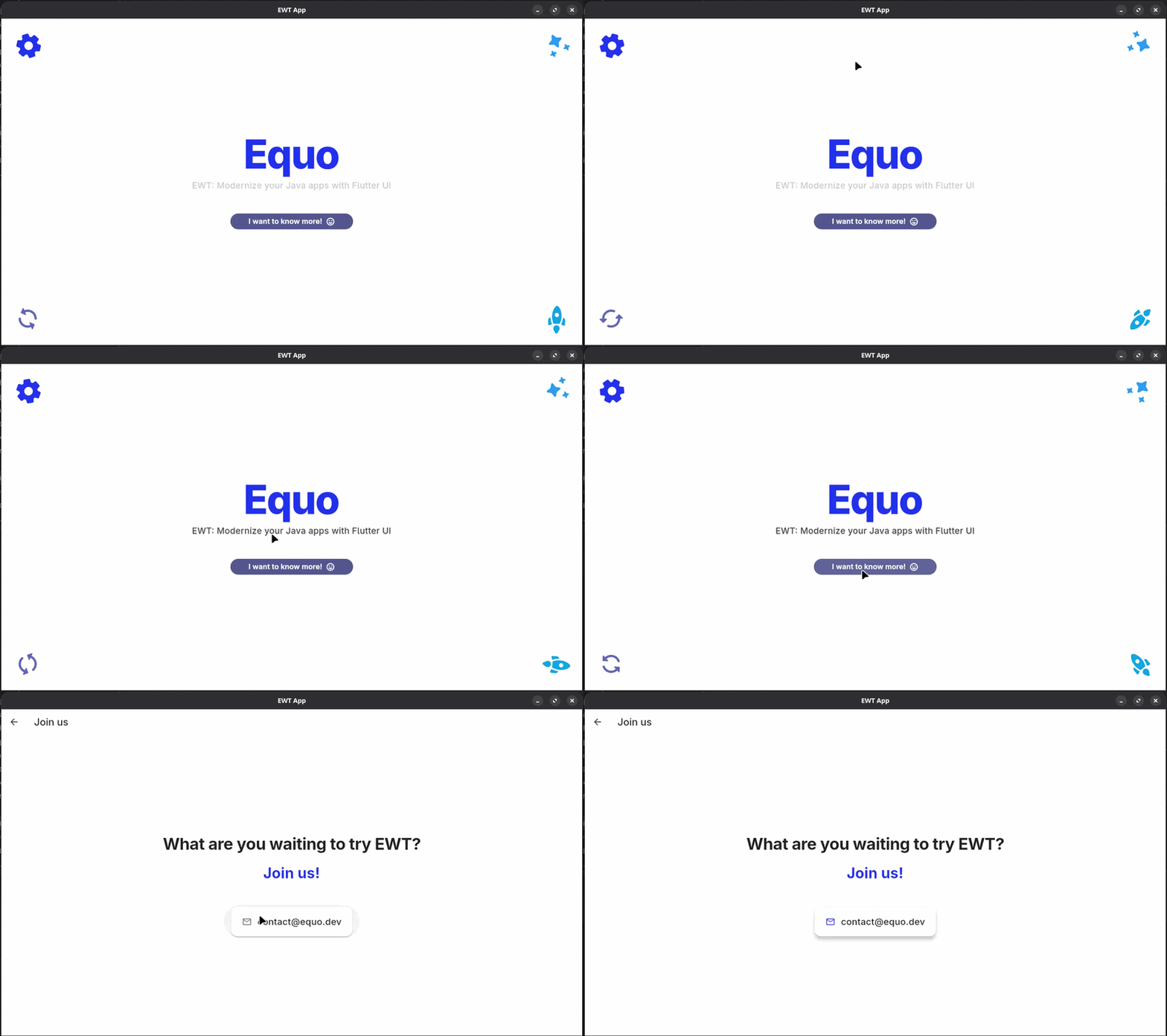
How EWT Works
EWT is built on Flutter, Google's modern rendering engine. When you describe a UI in Java, EWT builds a matching Flutter widget tree and hands it to a real Flutter engine running inside your JVM process — the same engine behind many of today's most polished apps. Flutter paints every pixel itself on the GPU, which is why the result is fluid and crisp at any resolution, and why it's a genuine step up in rendering over Swing, SWT, and JavaFX.
The key point: you get all of that while writing only Java (or Kotlin, Scala, any JVM language). The catalog you call from Java — Material, Cupertino, and Flutter's foundational widgets — maps directly to Flutter's own components, and animations run natively in the engine. There's no Dart to learn and no separate UI runtime to manage: EWT bridges your JVM code to the Flutter engine for you.
Who Is It For?
EWT is built for two types of organizations:
1. Teams Building New Applications
If your team works in the JVM ecosystem and you need to build a desktop application, EWT gives you access to a modern, fully featured UI toolkit without forcing anyone to learn a new language or platform. Your developers stay productive in Java or Kotlin while delivering a UI that matches the visual standards of 2026.
No compromise between developer familiarity and end-user experience.
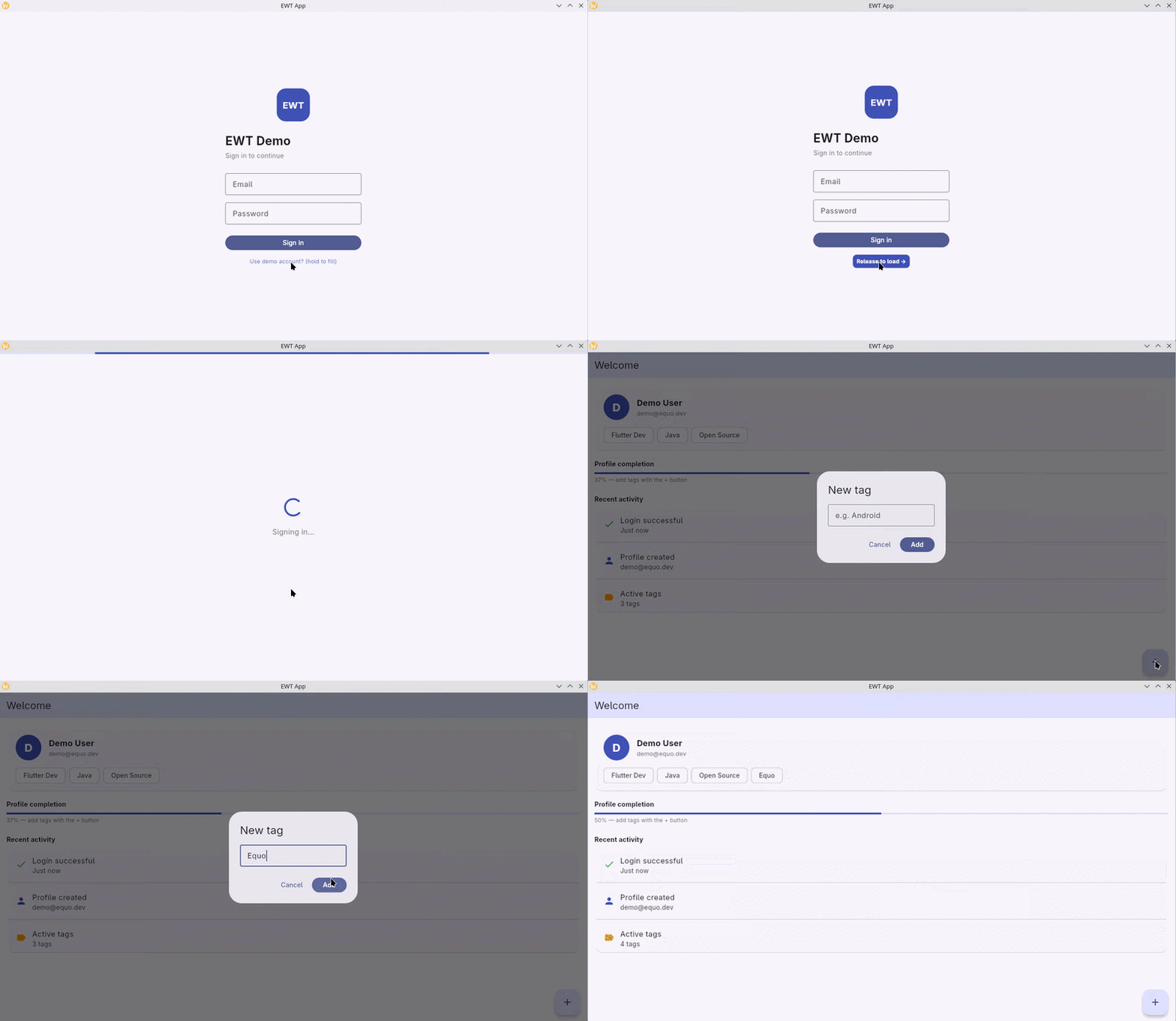
2. Organizations Modernizing Existing Java Applications
Many enterprises run mission-critical desktop applications built on SWT and Eclipse RCP — the kind of software that has been running for years and cannot simply be rewritten. For those teams, Equo offers a gradual modernization path:
The first step is SWT Evolve, our drop-in replacement for the SWT library. It requires no code changes — you swap the JAR and your application's interface is immediately modernized with GPU-accelerated rendering and a contemporary visual standard. And it doesn't stop at the desktop: SWT Evolve can also take your modernized application to the web, running it in a browser from the same codebase. It's not a rewrite. It's an upgrade.
From there, our roadmap brings EWT alongside SWT Evolve; you'll be able to introduce brand-new UI components that SWT simply doesn't have — new screens, new features, new experiences — built in EWT and rendered in the same window as your existing application. The goal is a transition that happens at your pace, feature by feature, screen by screen, without disrupting what already works.
Roadmap
EWT is under active, fast-moving development. Here's where we're headed:
Coming soon
On the horizon
The Bottom Line
Java teams should not have to choose between the language they know and the user experience their customers deserve. EWT closes that gap: a modern, open source UI library built for the JVM, with a clear path for new projects and a gradual on-ramp for applications that need to modernize without stopping the world.